TDS Water Testing Services & Total Dissolved Solids Analysis
MQTL provides laboratory testing to determine the total dissolved solids (TDS) concentration in water samples. Gravimetric analysis measures the mass of residue remaining after a filtered sample is evaporated and dried under specified conditions.
Method
180°C Gravimetric
Readability
0.0001 g
Documentation
Test Reports
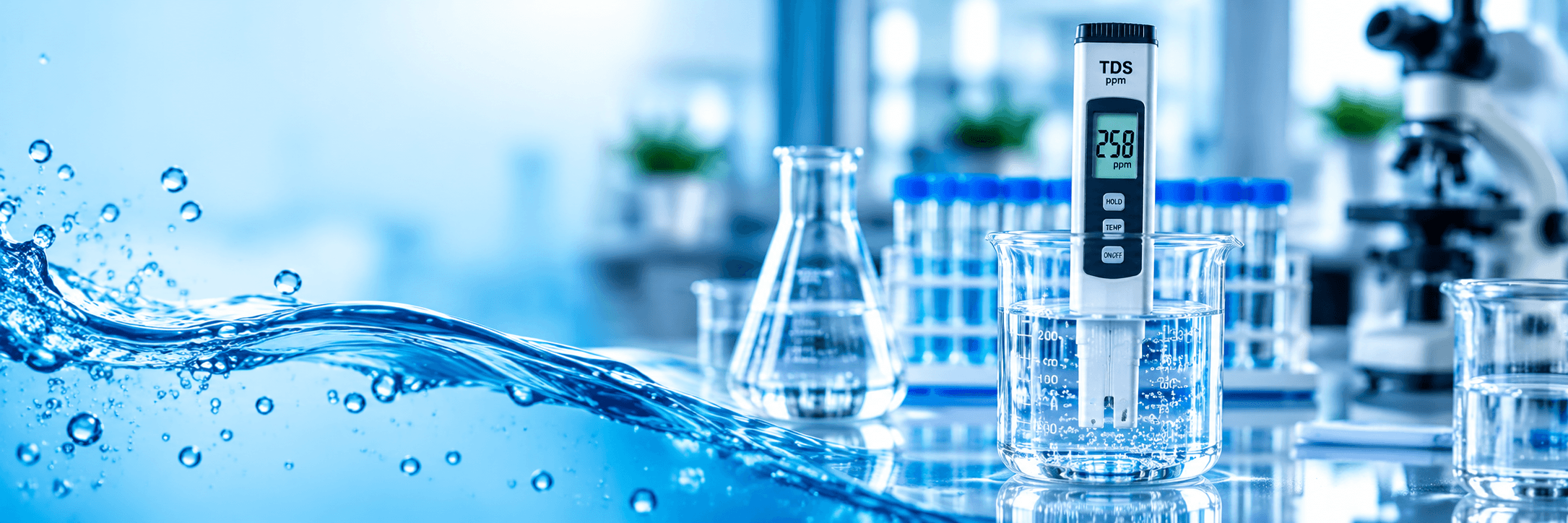
TDS Water Testing Services & Total Dissolved Solids Analysis
Quality-controlled laboratory testing to assess dissolved mineral content, compare water sources, monitor RO treatment performance, and support residential and industrial water quality monitoring.
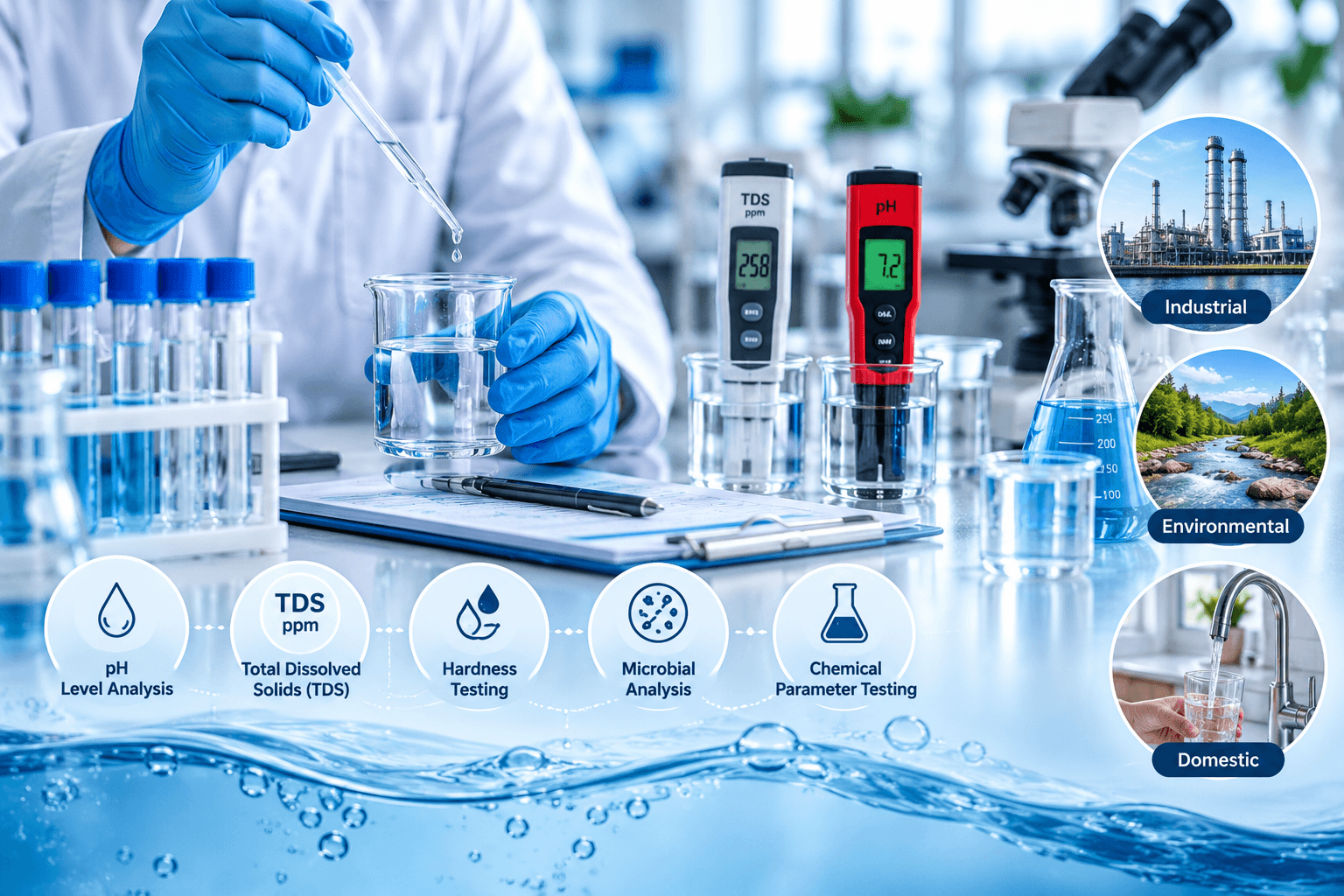
What is Total Dissolved Solids (TDS) Testing?
Total Dissolved Solids (TDS) represents the concentration of dissolved minerals, salts, and small amounts of organic matter that pass through a standard filter. Gravimetric analysis measures the mass of dried residue remaining after evaporating a filtered sample at 180°C.
TDS results help evaluate mineral content, track reverse osmosis (RO) performance, compare different water sources, and support water-quality monitoring. Note that TDS is one parameter among many; a TDS measurement alone does not determine whether water is safe to drink or free from harmful microbiological or chemical contaminants.
TDS between 150 and 300 mg/L may be acceptable from a taste perspective for some waters; actual taste varies with mineral composition and individual preference.
Standard specifications recognize an acceptable TDS baseline of 500 mg/L and a permissible ceiling of 2,000 mg/L where alternate sources are unavailable.
Elevated TDS may indicate increased dissolved mineral content and can affect taste or contribute to scaling, depending on the water's chemical composition and intended use.
TDS Levels, Ratings & Application Benchmarks
Standard classification of water quality based on Total Dissolved Solids for drinking, residential, and industrial use.
| TDS Concentration | Water Rating | Suitability & Application | Flavor & Impact Profile |
|---|---|---|---|
| < 50 mg/L | Very Low Mineral Water | Demineralized water, laboratory rinse, condensate, and specialized industrial processes. | Often described as flat or bland in taste; minimal dissolved mineral presence. |
| 50 – 150 mg/L | Low Mineral Water | Commonly observed in reverse osmosis (RO) permeate and low-mineral tap supplies. | Light taste profile; low residue upon evaporation. |
| 150 – 300 mg/L | Moderate Mineral Water | Common range for natural freshwater sources and municipal supplies. | TDS between 150 and 300 mg/L may be acceptable from a taste perspective for some waters; actual taste varies with mineral composition and individual preference. |
| 300 – 500 mg/L | Upper Drinking Water Baseline | Within generally accepted drinking water baselines (acceptable threshold of 500 mg/L). | Noticeable mineral presence; taste profile depends on dominant dissolved ions. |
| 500 – 2,000 mg/L | Elevated Dissolved Solids | Exceeds standard 500 mg/L acceptable baseline; recognized as permissible up to 2,000 mg/L where alternate sources are unavailable. | Elevated mineral taste; may contribute to scaling or altered flavor depending on dissolved constituents. |
| > 2,000 mg/L | High TDS / Brackish | Exceeds recognized permissible limits for drinking water; typically requires desalination or membrane treatment before use. | Distinct salty, bitter, or mineral taste; unsuitable for domestic consumption without comprehensive chemical characterization and treatment. |
| Project-Specific Criteria | Construction & Concrete Mixing | Subject to engineering specifications and construction standards (often assessed for solids, sulfates, and chlorides). | Excessive dissolved solids and reactive ions may impact setting times, concrete durability, or cause surface efflorescence. |
Laboratory Gravimetric TDS Analysis
Conducted using vacuum filtration, analytical laboratory ovens, and calibrated 0.0001 g balances.
Gravimetric Mass Determination
Unlike handheld conductivity meters that estimate TDS using proxy conversion multipliers, laboratory gravimetric testing measures the actual physical mass of dry residue on a 4-decimal analytical balance with 0.0001 g readability.
180°C Drying to Constant Mass
The filtered sample is evaporated and dried at 180°C to constant mass in accordance with applicable analytical methods. This standard thermal treatment removes mechanically held water to deliver reproducible filterable residue results.
Conductivity Correlation
Gravimetric results can be compared alongside temperature-compensated Electrical Conductivity (EC) measurements for sample screening and ongoing internal quality verification.
Crucial Applications of TDS Water Testing
Why builders, manufacturing plants, facility managers, and homeowners rely on verified TDS data.
Drinking Water Evaluation
Assessing dissolved solids concentration in municipal tap supply, packaged drinking water, and borewell sources.
RO Membrane Efficiency Audit
Comparing feed water versus permeate water to estimate dissolved solids rejection and evaluate membrane performance.
Civil Construction & Concrete
Testing batching and curing water against project specifications to evaluate dissolved salts and potential impact on concrete.
Boilers & Cooling Towers
Monitoring dissolved solids concentration in utility water to support blowdown scheduling and control scale buildup.
Borewell & Groundwater Sourcing
Groundwater characterization to determine dissolved mineral levels and assist in selecting appropriate filtration technologies.
Food & Beverage Processing
Evaluating water mineral consistency for commercial food preparation, beverages, and industrial processing.
Our 5-Step Laboratory Testing Workflow
Systematic procedure from sample filtration to 0.0001 g analytical balance weighing.
Sample Collection
Collection in clean, rinsed polyethylene or glass containers to prevent external residue or contamination.
Filtration
Filtration through a fine glass fiber filter to isolate filterable dissolved solids from suspended particulate matter (TSS).
Gravimetric Evaporation
Evaporation of a measured filtrate volume in a tared evaporating dish using a controlled heating bath.
180°C Drying to Constant Mass
The residue is dried at 180°C in an analytical oven and weighed according to the applicable method until the constant-mass criterion is met.
Laboratory Test Report
Desiccation in a controlled desiccator, precision weighing on an analytical balance, and delivery of a documented test report.
Need pH Water Testing (Acidity & Alkalinity) Too?
TDS measures total dissolved solids concentration, while pH measures acidity and alkalinity balance. Evaluating both parameters together supports a broader assessment of water quality.
Schedule Your TDS Water Test Today
Submit your water samples to our laboratory in Greater Noida for quality-controlled gravimetric analysis and detailed laboratory test reports.
Frequently Asked Questions About TDS Water Testing
Technical answers on test procedures, RO membrane performance, drinking water baselines, and laboratory methods.