pH Water Testing Services in Noida – Acidity & Alkalinity Analysis
Professional electrometric pH analysis using calibrated digital pH meters with temperature compensation. Essential for drinking water quality, concrete batching, and industrial water systems.
Method
Electrometric
Resolution
0.01 pH
Reports
Verified
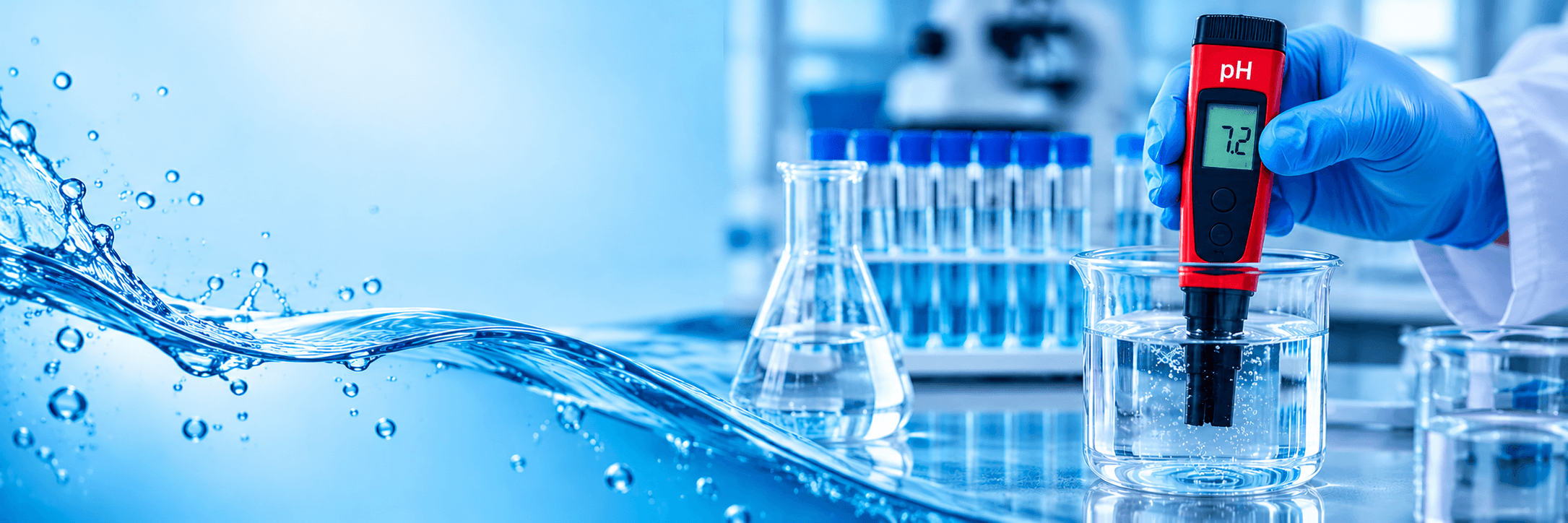
pH Water Testing Services in Noida – Acidity & Alkalinity Analysis
Professional electrometric pH testing utilizing calibrated digital meters and combination glass electrodes. Verify acidity and alkalinity balance for drinking water safety, concrete mixing durability, and industrial system protection.
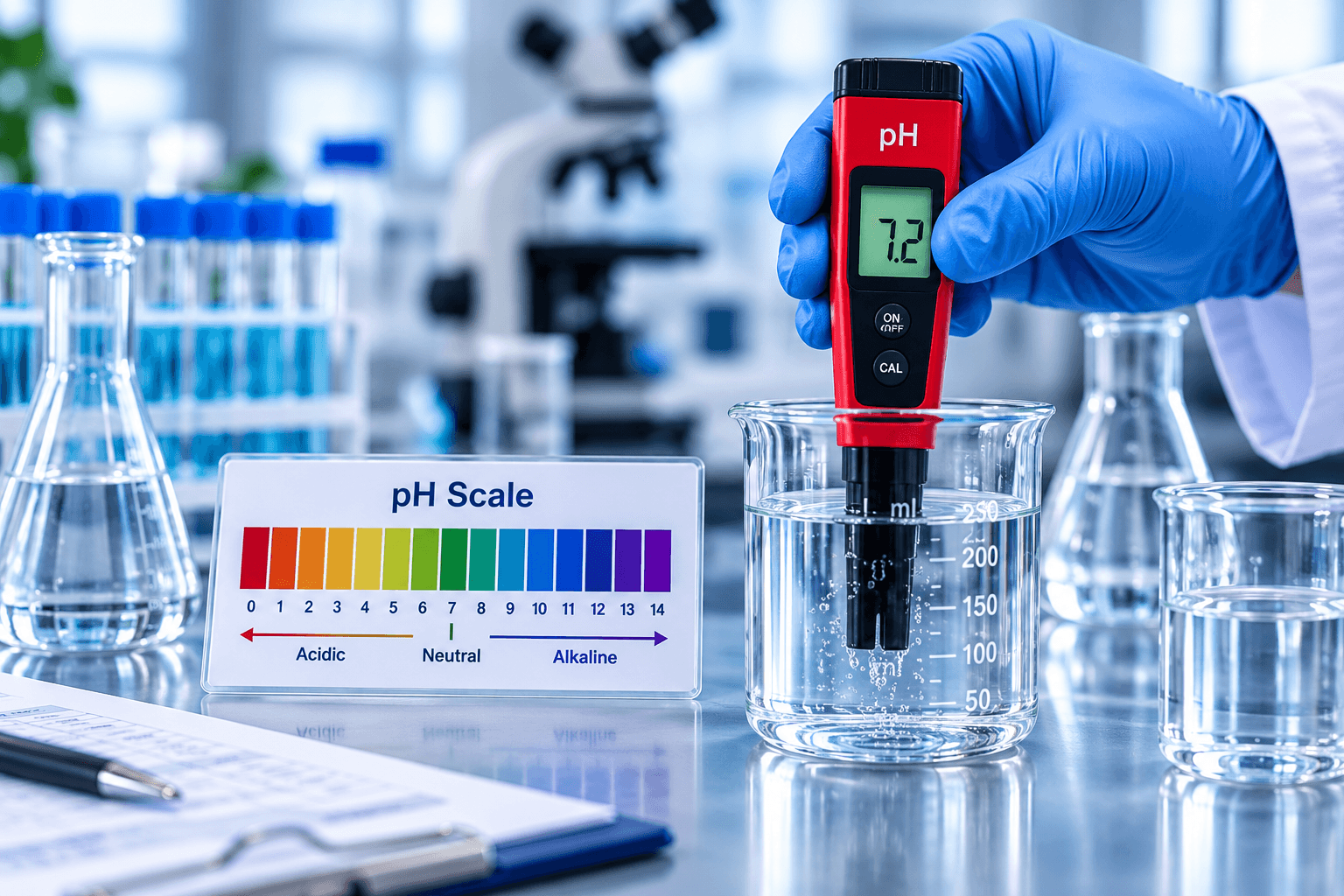
Understanding pH Water Testing & Ionic Equilibrium
The pH parameter is defined as the negative base-10 logarithm of hydrogen ion activity:pH = -log₁₀[a_H⁺]. It indicates whether a water sample is acidic, neutral, or alkaline on the conventional 0 to 14 scale.
Because the pH scale is logarithmic, each whole unit represents a ten-fold difference in hydrogen ion activity. Water at pH 5 has ten times the hydrogen ion activity of water at pH 6. Neutrality is temperature-dependent; at 25°C, pure neutral water has a pH of approximately 7.0.
Drinking Water Benchmark: National drinking water quality specifications prescribe an acceptable pH range of 6.5 to 8.5, with no relaxation permitted.
Characterized by excess hydrogen ions. Can increase the corrosivity of water toward metal plumbing and fixtures.
Represents balanced hydronium and hydroxide ion activities at the standard reference temperature.
Characterized by excess hydroxide ions. May contribute to mineral precipitation, scale formation, or an alkaline taste.
pH Standards & Benchmarks for Different Water Applications
Comparative benchmarks and operational considerations across municipal, construction, and industrial water categories.
| Water Application / Reference | Acceptable Range | Basis & Operational Limits | Primary Operational Impact |
|---|---|---|---|
| Potable Drinking Water Specifications | 6.5 – 8.5 | Acceptable limit (no relaxation permitted) | Values below 6.5 can increase corrosivity to plumbing and metal fixtures; values above 8.5 may promote mineral encrustation and reduce chlorine disinfection efficiency. |
| Concrete Mixing & Curing Water | Min 6.0 | Not less than 6.0 | Water with pH below 6.0 can interfere with cement hydration, retard setting times, and increase the risk of reinforcement steel corrosion. |
| Industrial Boiler Feedwater | Programme-Specific | Governed by boiler design, pressure & treatment programme | Controlled alkaline conditions help maintain a passive protective oxide layer on boiler tubes to prevent acidic pitting. |
| Cooling Tower Recirculating Water | System-Specific | Determined by water chemistry, cycles & chemical treatment | Target operational range balances calcium carbonate scale mitigation with corrosion control across system metallurgy. |
| Swimming Pool & Recreational Water | 7.2 – 7.8 | Commonly used operational target (not a statutory limit) | Maintains bather skin and eye comfort while supporting effective residual sanitizer and chlorine action. |
| Agricultural Irrigation Water | Site & Crop-Dependent | Typically 6.5 – 8.4 depending on soil buffering capacity | Extreme pH levels can alter soil chemistry and restrict the root uptake of essential plant micronutrients. |
| Treated Industrial Process Effluent | 5.5 – 9.0 | General discharge standard (consent conditions may be stricter) | Protects municipal drainage systems and natural receiving water bodies from acute chemical disturbance. |
Our Electrometric Testing Method
Conducted in accordance with standard electrometric procedures and APHA 4500-H⁺ B using calibrated digital instruments.
Combination Glass Electrode
Measures the potential difference developed across a hydrogen-ion-sensitive glass membrane relative to an internal silver/silver chloride (Ag/AgCl) reference cell.
Calibration Using Certified Buffer Solutions
Calibration is performed using suitable certified buffer solutions covering the expected pH range of the sample. Two-point or three-point calibration is carried out as required by the applicable testing method.
Automatic Temperature Compensation
The laboratory uses digital pH meters equipped with temperature sensors to compensate for the temperature-dependent response of the pH electrode. Sample temperature is monitored and recorded during analysis. ATC improves measurement consistency but does not automatically convert the sample's actual pH to its value at 25°C.
Applications of pH Water Testing
Why industries, infrastructure projects, and commercial facilities require verified pH testing.
Drinking & Potable Water
Verification of municipal tap supply, residential borewells, and packaged water against national drinking water quality benchmarks.
Civil Construction & Concrete
Testing water intended for concrete mixing and curing to safeguard cement hydration chemistry and reinforcement durability.
Boilers & Steam Systems
Routine pH monitoring of boiler feed and condensate water to protect metal surfaces from acid corrosion and scaling.
Commercial RO & Filtration
Pre-filtration and post-treatment pH verification to evaluate mineral balance and filtration membrane performance.
Food & Beverage Processing
Ingredient and utility water testing to maintain product consistency, microbial stability, and processing hygiene.
Treated Effluents & Compliance
Discharge assessment of treated wastewater effluents to ensure alignment with applicable environmental consent conditions.
Sample Collection Requirements for pH Testing
Proper collection, containment, and prompt transport protect the sample from atmospheric carbon dioxide exposure and condition changes.
Container Selection
Water samples should be collected in clean, suitable polyethylene or borosilicate glass containers, securely sealed and protected from external contamination.
Recommended Quantity
A minimum sample volume of 250 mL to 500 mL is recommended for routine pH analysis. For broader multi-parameter packages, larger composite volumes may be required.
Minimizing Air Exposure
Fill containers appropriately and seal tightly to minimize atmospheric exposure. Dissolved atmospheric carbon dioxide (CO₂) forms carbonic acid, which can depress sample pH over time.
Prompt Laboratory Dispatch
Samples should be transported promptly and analyzed as soon as practicable after collection because temperature changes and dissolved gas equilibria can alter measured pH.
Testing Standards & Analytical References
Analytical protocols and quality benchmarks referenced by our laboratory for water and wastewater testing.
Standard Electrometric & APHA 4500-H⁺ B
Methods of Sampling and Test (Physical and Chemical) for Water and Wastewater – Electrometric Determination of pH Value, detailing electrode preparation, buffer standardization, and reading stability criteria.
National Drinking Water Quality Standards
Standard Drinking Water Specifications prescribing an acceptable limit of pH 6.5 to 8.5 with no relaxation permitted across public, municipal, and packaged potable water sources.
Construction & Environment Guidelines
Technical specifications for concrete mixing water requiring pH not less than 6.0, alongside Environment (Protection) Rules general effluent discharge guidelines of pH 5.5 to 9.0.
Laboratory Testing Procedure
Documented workflow ensuring reproducible measurements and chain of custody.
Sample Receipt & Logging
Samples are logged, checked for proper sealing and container integrity, and assigned a laboratory tracking code.
Temperature Monitoring
Sample temperature is measured and recorded during analysis to account for temperature-dependent electrode response.
Certified Buffer Calibration
Two-point or three-point calibration using certified standard buffer solutions covering the expected pH range.
Electrometric Reading
Measurement using a clean combination glass electrode with gentle agitation until a stable reading is established.
Laboratory-Verified Test Report
Results are reviewed against applicable reference standards and issued as a verified laboratory test report with a QR code.
Why Choose MQTL for Water Testing
Reliable testing workflows supported by experienced analysts, documented procedures, and quality-controlled sample handling.
Experienced Chemists
Testing is supervised by experienced analytical chemists proficient in wet chemical and electrometric water analysis.
Calibrated Instruments
Digital pH meters equipped with combination electrodes and temperature sensors calibrated with certified buffer solutions.
Documented Procedures
Standard operating procedures aligned with standard electrometric and APHA methods ensure reliable, reproducible test results.
Quality-Controlled Handling
Structured sample registration, environmental monitoring, and prompt analysis minimize potential condition changes.
Verified Test Reports
Comprehensive test reports detailing sample temperature, observed pH, and reference limits with QR codes for verification.
Technical Guidance
Consultation on sampling requirements, test package selection, and interpretation of parameters relative to project specifications.
Need Total Dissolved Solids (TDS) Testing Too?
While pH measures the acidity or alkalinity of water, Total Dissolved Solids (TDS) quantifies the concentration of dissolved inorganic minerals and salts. Combining both provides a more complete profile of water quality.
Schedule Your pH Water Test Today
Submit your water samples to our laboratory in Noida for professional testing and laboratory reports.
Frequently Asked Questions About pH Water Testing
Technical guidance on sample collection, recommended thresholds, and standard testing protocols.