Concrete Paver Block Testing Services & Laboratory
Professional laboratory testing to evaluate compressive strength, water absorption, abrasion resistance, tensile splitting, dimensions, and wearing layer thickness for precast interlocking paver blocks.
PRECAST CONCRETE & PAVING MATERIAL TESTING
Concrete Paver Block Testing Services & Laboratory
Professional laboratory testing to evaluate compressive strength, water absorption, abrasion resistance, tensile splitting, dimensions, and wearing layer thickness for precast interlocking paver blocks.
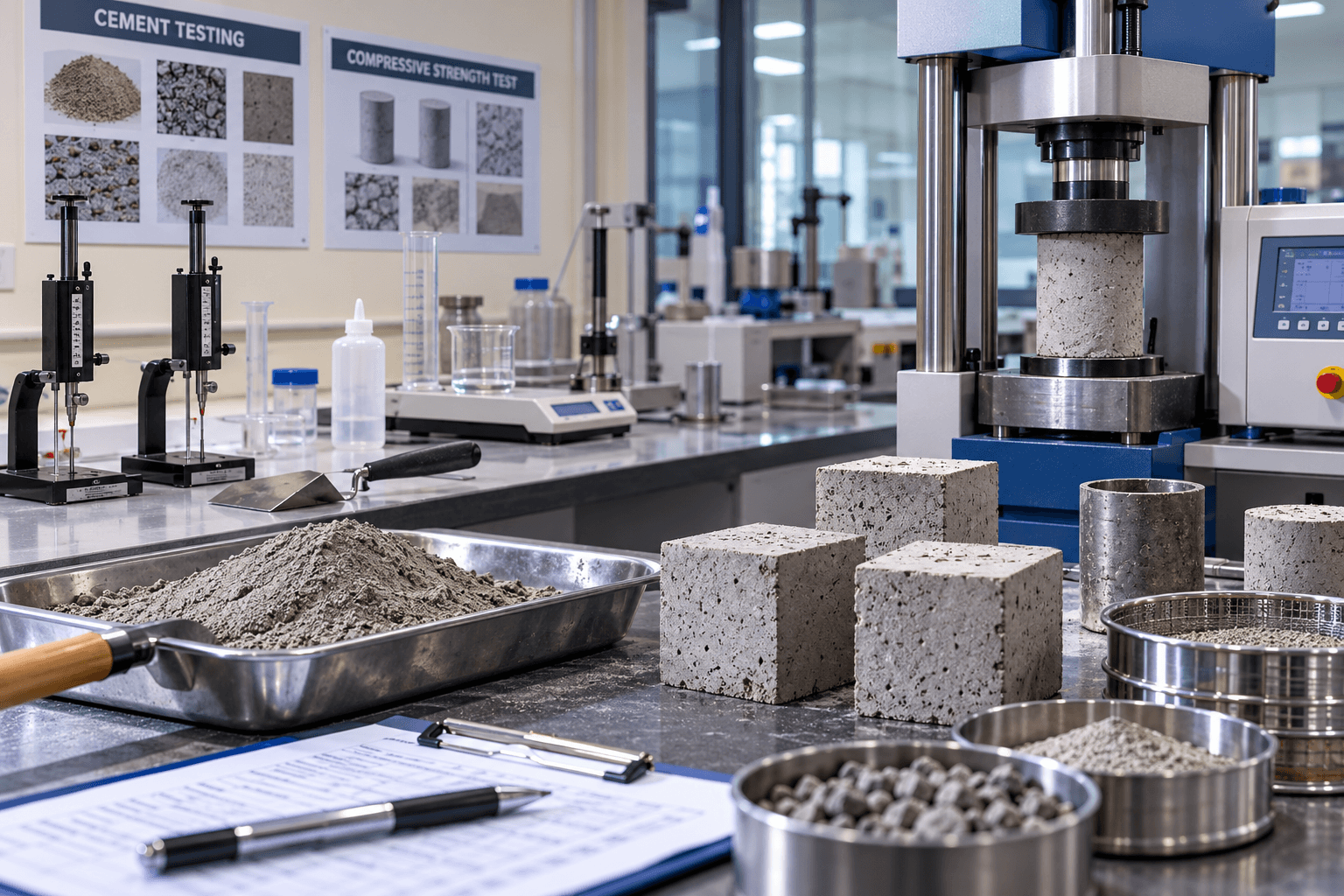
Professional Paver Block Quality Evaluation Laboratory
Our laboratory provides reliable testing services for precast concrete interlocking paver blocks used across pedestrian footpaths, city thoroughfares, petrol pump forecourts, and heavy-duty container freight stations.
Paver performance depends on high density, low water absorption, and superior abrasion resistance. We perform standardized tests including corrected compressive strength, 24-hour water absorption, abrasion loss, tensile splitting strength, and dimensional tolerances as per published standard methods, verifying durability before site installation.
Reliable
Testing Services
Advanced
Testing Equipment
Quality
Test Reports
Our Comprehensive Paver Block Testing Services
Standardized physical, mechanical, and dimensional evaluations performed under controlled laboratory conditions.
Compressive Strength (Corrected)
Determines failure crushing load on calibrated compression testing machines with thickness correction factors applied to verify design strength grades (M-30 to M-55) under standard mechanical testing protocols.
Water Absorption Test
Measures 24-hour immersion water intake to assess porosity and durability under wet weather (limit ≤ 6.0% average mass gain; ≤ 7.0% individual) under standard laboratory methods.
Abrasion Resistance Test
Evaluates surface loss under abrasive friction on rotating disk test apparatus to guarantee long service life on high-traffic roads, terminals, and footpaths under standard abrasion procedures.
Tensile Splitting Strength
Measures indirect tensile strength along specimen contact lines to prevent brittle block cracking under heavy rolling truck axle loads under standard tensile splitting methods.
Flexural Strength & Breaking Load
Evaluates bending strength and total transverse breaking load across supporting roller spans to verify load distribution on granular bedding layers under standard transverse flexural protocols.
Dimension & Plan Aspect Ratio
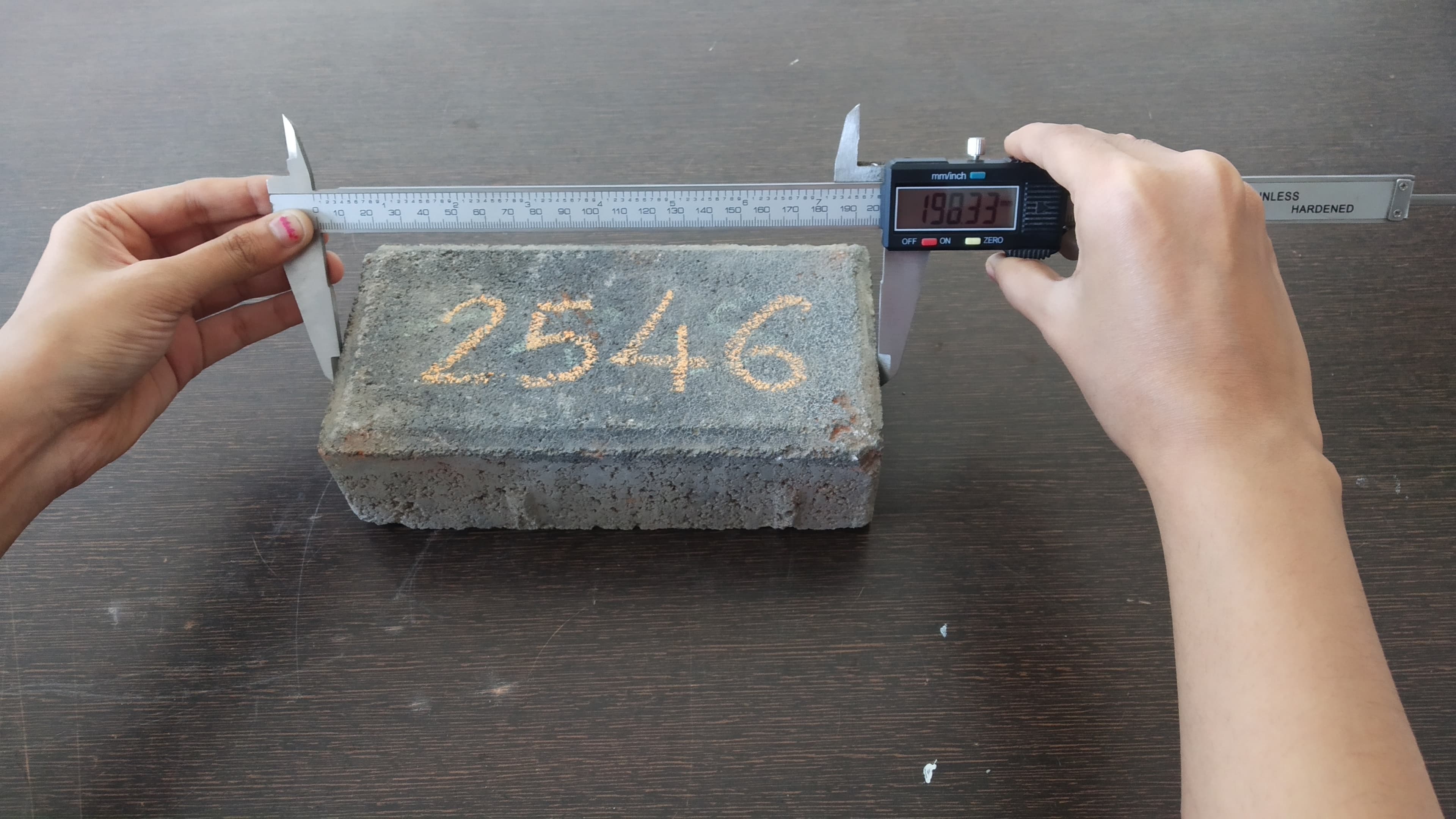
Verifies length, width, thickness (60 mm, 80 mm, 100 mm, 120 mm), and aspect ratio tolerances (± 2 to 3 mm) using precision digital calipers under standard dimensional tolerance guidelines.
Thickness of Wearing Layer
Measures face-mix layer thickness on two-layer paver specimens to confirm compliance with minimum 6.0 mm wear thickness requirements across cross-sections under standard quality guidelines.
Visual Appearance & Edge Arrises
Inspects surface texture uniformity, color pigment stability, edge arrises, chamfer geometry, and freedom from honeycombing, spalling, or micro-cracks under standard visual inspection methods.
Freeze-Thaw & Weathering Durability
Evaluates resistance to cyclic thermal shocks and moisture deterioration to prevent surface scaling and aggregate pop-outs in demanding outdoor environments under standard durability procedures.
Paver Block Testing for Urban, Commercial & Industrial Pavements
Our testing services support municipal urban beautification projects, industrial logistics parks, commercial retail plazas, and fuel station driveways. Independent testing verifies that each batch possesses proper compressive capacity, arris integrity, and abrasion life for lasting pavement performance.
Pedestrian Walkways
M-30 / M-35 Grades
City Roads & Streets
M-40 Medium Traffic
Industrial & Ports
M-50 / M-55 Heavy Duty
Commercial Parking
Interlocking Pavers
Our Paver Block Testing Process
Intake & Visual Inspection
Inspection of received paver blocks, batch logging, and verification of surface arrises.
Dimensions & Tolerances
Precision caliper measurements of length, width, thickness, and wearing layer depth.
Water Conditioning
24-hour water immersion at controlled room temperature to determine water absorption %.
Compressive & Splitting
Controlled loading on calibrated UTM with aspect ratio correction factors applied.
Report Issuance
Verification of parameters against standard quality limits and verified laboratory reports issued.
Sample Submission Guidelines for Paver Block Testing
Follow these technical guidelines when preparing and dispatching paver block samples to our laboratory facility in Noida.
Sample Quantity
Submit a minimum of 8 to 16 full, undamaged paver blocks per production lot as per standard sampling guidelines to cover compressive strength, absorption, and abrasion tests.
Curing Milestone
Ensure paver blocks have attained at least 28 days of standard curing (or verified steam-cured equivalent) prior to final mechanical strength evaluation.
Edge & Surface Protection
Pack specimens with corrugated separators in heavy-duty cardboard cartons or strapped bundles to prevent edge chipping and arris damage during transit.
Intake & Delivery
Deliver directly to our laboratory facility at Plot No. 79, Sector 155, Noida (201310), accompanied by a test requisition form indicating paver thickness and design grade.
Why Choose MQTL for Paver Block Testing?
Accurate, standard-referenced physical and mechanical evaluations backed by experienced materials testing engineers.
Calibrated Equipment
Testing executed on automated compression rigs with digital pace rate controllers, abrasion disks, and precision calipers calibrated to national standards.
Documented SOPs
Every test method references recognized published standard engineering procedures for precast concrete paving blocks.
Verified Test Certificates
Standard dimensional, absorption, and compressive strength certificates issued upon test completion.
Engineering Expertise
Direct consultation with qualified civil materials engineers to interpret aspect ratio correction factors and traffic suitability.
Need Reliable Paver Block Quality Testing?
Connect with our testing experts in Noida to schedule specimen evaluation, request customized batch testing, or obtain verified laboratory test reports.
Frequently Asked Questions About Paver Block Testing
Technical guidance on compressive strength grades, water absorption limits, aspect ratio correction, and sample handling.